3 Ways Young Children Can Connect with Music Before Formal Lessons
Published 26 August 2026 at 11:07
Tickikids Blog Dubai > Parenting > 3 Ways Young Children Can Connect with Music Before Formal Lessons
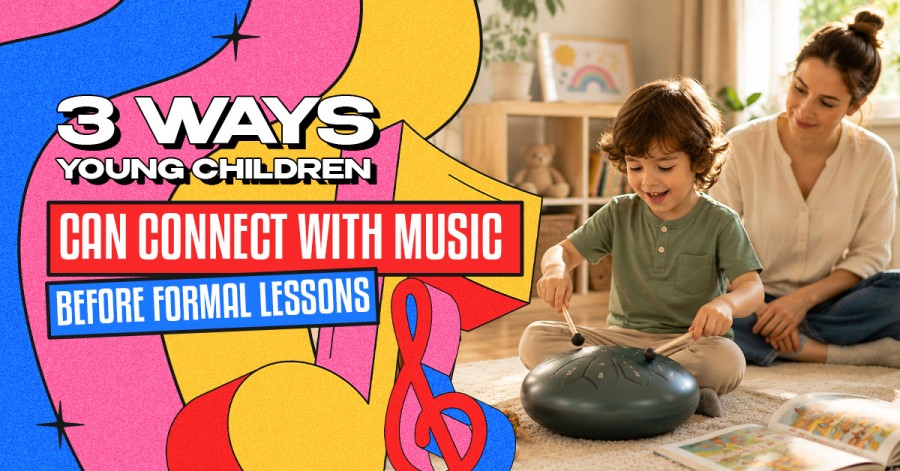
When parents think about introducing a child to music, it is easy to jump straight to lessons.
Should we try piano? Is five too young for guitar? Should we find a music teacher? Will my child actually practice?
But formal lessons are only one way into music, and for many young children, they do not need to be the first one.
Long before children understand scales, notation, or technique, they can discover something much simpler: making music feels good.
They can tap a rhythm, sing a familiar melody, experiment with different sounds, or discover that a sequence of notes suddenly becomes a song they recognize. These early experiences matter because they allow children to develop a relationship with music before music becomes something they are expected to “get right.” For parents who want to encourage musical curiosity at home, there are three especially simple ways to begin:
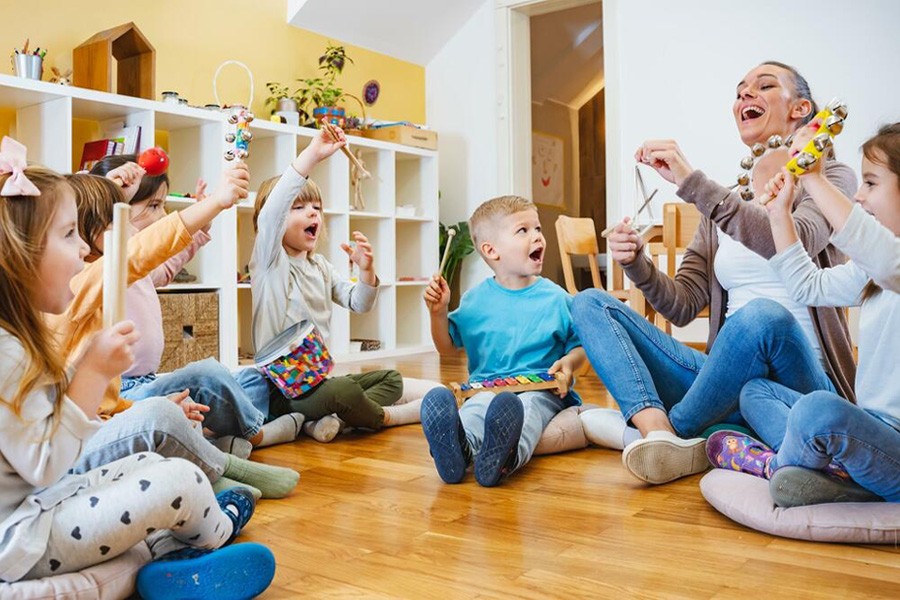
Image Credit: iStock
Each offers children a different doorway into music, and none requires previous musical experience from either the child or the parent.
1. Explore: Let Children Discover Sound Before Teaching It
Give a young child an instrument and watch what happens before offering instructions.
Most children will experiment. They might hit the same note repeatedly. Then try another. They may play loudly, then softly.
They may create a pattern without realizing they are creating a pattern at all.
This kind of exploration can look random to an adult, but it is an important part of discovering how music works.
Children begin noticing simple relationships:
- Different actions create different sounds.
- Some sounds are higher or lower than others.
- Rhythms can repeat.
- Playing faster changes how something feels.
- Two or three sounds can be combined into a pattern.
- They are learning through cause and effect.
Start With Instruments That Reward Experimentation
Some instruments are easier to explore than others.
Young beginners tend to benefit from instruments that produce an immediate sound without requiring complicated technique. Hand drums, shakers, xylophones, small keyboards, bells, and tongue drums can all offer this kind of immediate feedback.
The goal during this stage is not to teach a song. It is to let the child discover: “When I do this, I create that sound.”
That sense of control is powerful. Instead of music being something coming from a speaker, television, or adult performer, it becomes something the child can create.
Resist the Urge to Correct Every Sound
Adults naturally want to help.
We may say, “Try it like this,” or “No, hit this one next.”
Sometimes instruction is useful. But during musical exploration, too much correction can unintentionally change the activity from discovery into performance. Try occasionally sitting back and listening instead.
If your child creates a three-note pattern, copy it.
If they tap a rhythm, answer with another rhythm.
If they play something unexpectedly loud, experiment together with the difference between loud and soft.
This turns musical play into a conversation.
There is no wrong note because there is no predetermined result.
2. Play: Help Them Discover That They Can Make a Real Song
Free exploration is valuable, but something different happens when a child realizes the sounds they are making have become a melody they know. Imagine a child tapping a few notes and suddenly recognizing “Twinkle, Twinkle, Little Star” or another familiar tune.
There is often an immediate reaction: “I know that song!”
Recognition provides feedback that does not need to come from an adult. The child can hear for themselves that the sequence worked.
That can make playing familiar songs an especially rewarding bridge between musical exploration and more structured learning.
Make the First Songs Easy to Follow
Traditional musical notation is an extremely useful system, but a child does not need to understand it before experiencing the satisfaction of playing a melody. For a very young beginner, simpler visual systems can provide an entry point.
Numbers, colors, symbols, or other visual cues can show a child what comes next without asking them to simultaneously learn staff notation, note names, rhythm values, and instrument technique.
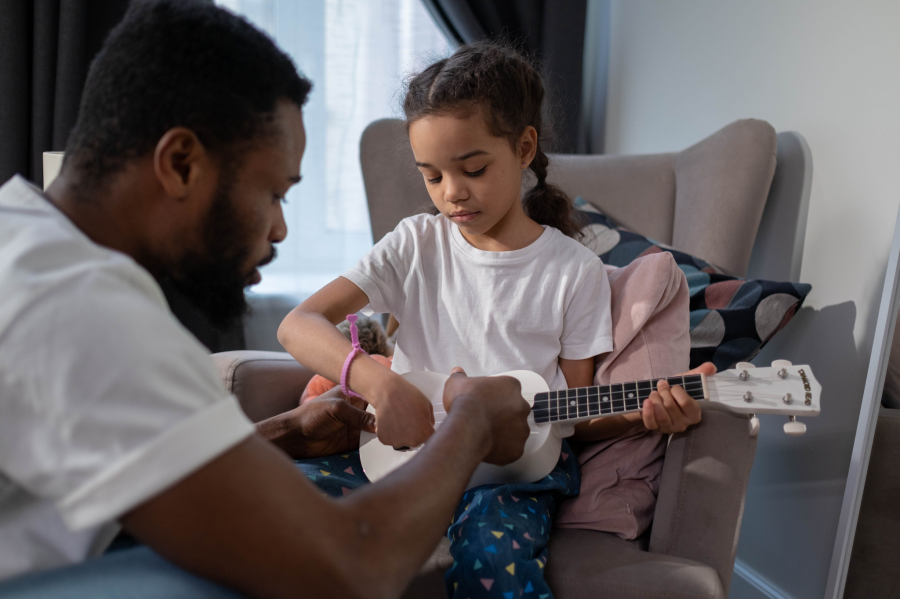
Image Credit: Pexels
The purpose is not to replace music education.It is to create a shorter path to the first successful experience.
Once children understand that they can make music themselves, they may become more interested in learning how music works.
Look for a Clear Connection Between the Guide and the Instrument
One reason beginner instruments can sometimes become frustrating is that the child has to translate between several systems.
The book shows one thing. The instrument shows another. The parent has to explain how they connect.
For young beginners, reducing those translation steps can make independent play much easier.
A useful example is Sounds of Silence, a brand that designs steel tongue drums specifically with young beginners in mind. Its eight numbered notes are arranged sequentially from 1 through 8 rather than in the scattered layout commonly found on many tongue drums. The accompanying numbered songs allow children to visually connect what they see on the page with what they see on the instrument.
That small design choice demonstrates a broader principle parents can use when evaluating any beginner instrument:
The easier it is for a child to understand what to do next, the more independently they can experiment.
And independence matters.
When a child can work out the next note without an adult constantly directing them, the achievement belongs to the child.
Do Not Rush From Playing Into Practicing
Once children successfully play a recognizable song, adults sometimes immediately raise the bar.
“Great! Now let's play it perfectly.”
“Let's do it again.”
“Now try a harder one.”
But a child does not necessarily need every successful musical moment to become a practice session.
Sometimes it is enough to celebrate the discovery.
They played something.
They recognized it.
They want to do it again.
That is already a valuable outcome.
The more positive early experiences children have with making music, the more likely they may be to see an instrument as something they choose to pick up rather than something they are required to practice.
3. Imagine: Connect Music With Stories and Pretend Play
There is another doorway into music that parents sometimes overlook entirely: imagination.
Young children naturally understand stories.
A stuffed animal can have a personality. A cardboard box can become a rocket. A blanket can become a castle.
Music can become part of that imaginative world too.
Instead of asking only, “What song can we play?” try asking: “What does this sound remind you of?”
“Can you make music for a giant walking?”
“What would raindrops sound like?”
“What sound should we play when the character feels happy?”
Suddenly the instrument is no longer simply an object for practicing notes. It is part of a story.
Musical Stories Give Sound a Purpose
Combining storytelling and music allows children to experience sound in context.
A quiet pattern might accompany someone sneaking through a forest.
A repeated note might represent footsteps.
A higher sound might represent a bird.
A gentle melody might become part of a bedtime story.
The child is still experimenting with pitch, rhythm, dynamics, and repetition, but those musical concepts are connected to something they already understand: imagination. This can be particularly useful for children who do not immediately respond to traditional “let's learn a song” activities. Some children are drawn to patterns. Others are drawn to movement. Others are drawn to stories.
There is no reason all of them need to enter music through the same door.
Combine Stories With Real Instruments
Musical storytelling does not require a special curriculum.
Choose a favorite picture book and add simple sounds as you read.
Ask your child to choose a sound for a character.
Create a short rhythm every time a repeated phrase appears.
Pause and let your child decide what a scene should sound like.
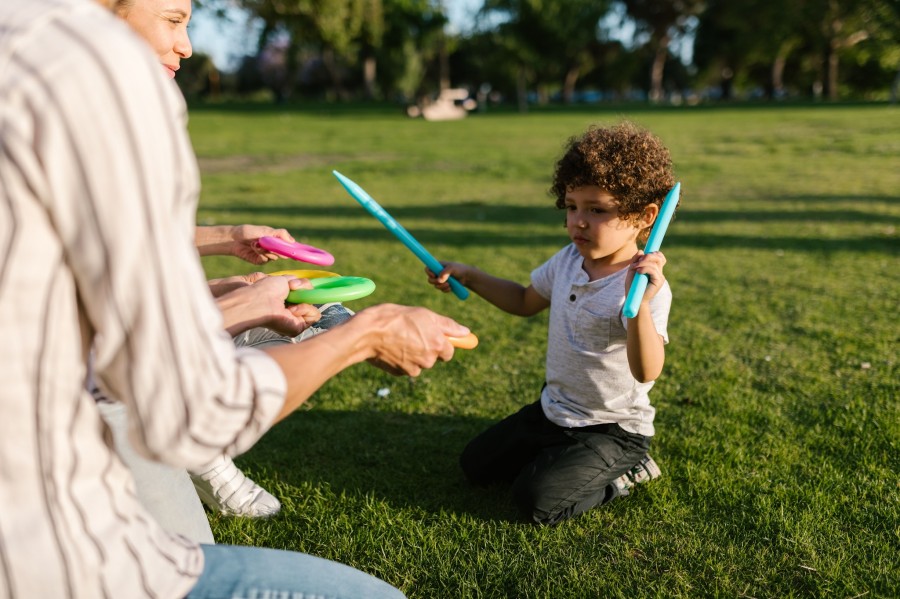
Image Credit: Pexels
Some children's music products are beginning to combine these experiences intentionally. Sounds of Silence, for example, pairs its beginner drums not only with numbered songbooks but also with original musical stories. For parents exploring where to begin, choosing a first musical instrument for a young child can be less about formal lessons and more about finding an instrument that makes exploration feel simple and rewarding.
Follow the Child's Preferred Doorway
One child may immediately want to play songs. Another may ignore the songbook and spend twenty minutes inventing rhythms.
Another may be much more interested when the instrument becomes part of a story.
All three children are engaging with music. Parents do not necessarily need to decide which approach is the “correct” one.
Instead, watch what keeps your child engaged. If they love repetition, create rhythm games. If they love recognizable songs, give them simple melodies to follow. If they love pretend play, turn sound into storytelling.
If they constantly invent their own combinations, let improvisation be the activity.Their preferred way into music may change over time.
Turn Everyday Moments Into Musical Games
Introducing children to music does not require scheduling a special hour. Short musical moments can fit naturally into family life.
Try clapping the syllables in your child's name. Copy each other's rhythms at the dinner table.
Sing instructions instead of speaking them. Create a “question” rhythm and let your child answer it.
Tap slowly while pretending to be an elephant and quickly while pretending to be a mouse.
Choose three notes and invent a tiny song.
Ask your child to create a sound effect for a story you are reading.
These activities may last only a few minutes, and that is perfectly fine.
Young children do not need a forty-five-minute lesson to have a meaningful musical experience.
What About Screen-Free Music?
Music is often suggested as a screen-free activity for children, but there is an important distinction worth making.
Listening to music without a screen is valuable. Making music adds another dimension.
The child is no longer only receiving the experience. They are making decisions.
What should I play? What happens if I repeat this? Can I copy that rhythm? Can I make this sound like the song?
What happens if I change it? This active participation is one reason having even a very simple instrument available at home can create opportunities that listening alone cannot. The instrument does not need to be expensive or advanced.
It needs to invite interaction.
When Are Children Ready for Formal Music Lessons?
There is no universal age when every child should begin formal lessons.
Readiness depends on the child, the instrument, the teacher, and what the family hopes to achieve.
Instead of focusing only on age, parents can look for signs of interest.
- Does your child repeatedly return to an instrument?
- Do they ask how to play particular songs?
- Do they enjoy copying rhythms or melodies?
- Do they want to know more about how the instrument works?
- Can they comfortably focus on a guided activity for an appropriate amount of time?
If so, lessons may be a natural next step.
But there is no need to treat the time before lessons as waiting.
Children can already be building a relationship with music.
Choose an Invitation, Not an Obligation
When selecting musical activities or a first instrument, parents may find it helpful to think less about what a child “should learn” and more about what invites participation.
Ask:
- Can my child make an enjoyable sound quickly?
- Can they explore without constant correction?
- Is there an accessible way to experience success?
- Can they use the instrument in more than one way?
- Does it leave room for imagination?
- Does my child want to return to it?
An instrument that answers those questions well may be doing exactly what a first musical experience needs to do.
Explore, Play, Imagine
A child's musical journey does not have to begin with sitting at a lesson and learning the names of notes.
It can begin much earlier and much more simply.
Explore: What sounds can I make?
Play: Can I turn these sounds into a song?
Imagine: What can these sounds become?
Eventually, some children will want lessons. They may learn notation, technique, scales, chords, and all the other skills that allow musicians to grow.
But before all of that, there is something even more fundamental to discover: Music is something I can make.
Giving children different ways to discover that idea may be one of the simplest ways to help a genuine interest in music begin.